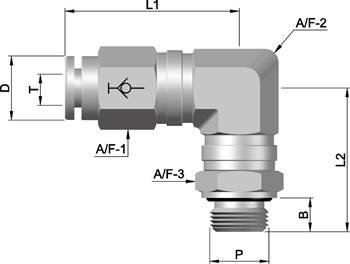
Two components can screw together cleanly and still make a poor pairing. Size charts only tell part of the story. Pneumatic valve fittings carry published limits for pressure, temperature and thread form, and a mismatch on any one of them puts the whole line at risk. Compatibility on paper is where sound selection begins.
Where a Perfect Fit Still Fails
Reading the Ratings Before the Thread Gauge: Every valve in a compressed air circuit works inside a defined envelope. Pneumatic valve fittings rated for 40 bar, around 580 psi, behave very differently at 45 bar. The margin disappears fast. Seals harden, seats deform, and a joint that passed its bench test can start weeping within a few months of commissioning.
Sorting the Options by Duty, Not by Name: Catalogues group pneumatic fittings types by connection style rather than by duty, which misleads buyers. Stainless steel check valves show the spread well. Sizes run from 1/8 inch to 1 inch, pressure ratings sit between 0.5 bar and 40 bar, roughly 7 psi to 580 psi, and service temperatures reach 180 degrees Celsius.
Numbers That Keep a Circuit Honest
Heat Changes the Rules Mid Shift: Temperature ratings deserve the same scrutiny as pressure. A wash-down bay running at 150 degrees Celsius, about 302 degrees Fahrenheit, leaves headroom below a 180 degree ceiling. Steam purging may not. Specifying pneumatic valve fittings against peak temperature rather than average temperature keeps that safety headroom honest during every single cycle.
Materials Move More Than Drawings Admit: Metals grow as they heat. Thermal expansion loosens joints that felt solid at ambient temperature, and repeated cycling widens the gap each time. Stainless steel bodies resist this better than brass in hot service, though no material escapes it. Torque values and seal choices need to reflect the hottest hour of operation.
Threads Speak Different Languages
Four Standards and One Chance to Match Them: Connection choice trips up more orders than pressure ever does. Ranges span BSP, BSPT, NPT and SAE straight threads in male and female configurations. Checking pneumatic fittings types against the mating port, not against habit, prevents the classic mistake of forcing a tapered NPT thread into a parallel BSP port.
Why Sealing Method Follows Thread Form: Tapered threads seal on the flanks and need tape or paste. Parallel forms rely on a bonded washer or an O ring at the shoulder. Proper thread engagement matters in both cases, since a joint made up two turns short will pass a soap test and fail under vibration weeks later.
A Checklist Before the Purchase Order Goes Out
Whole System Thinking Beats Pipe Size Shopping: Pipe size alone tells a buyer almost nothing. The full specification sheet decides whether a valve survives its first year in service. Before signing off on an order, run the application against every published parameter, not only the one already printed on the pipe sitting in the rack.
- Confirm maximum and minimum system pressure in bar and psi, including spikes
- Check the highest temperature the line will ever see, not the average
- Match thread standard and gender to the mating component exactly
- Verify material grade against the media
- Note flow direction for check valves before installation
Build the Line Once and Trust It for Years
Every parameter checked at the desk is a failure avoided on the floor. Pressure, temperature, and thread form work as one specification, and treating them separately invites the leaks that shut lines down. Review the full data sheet against the application, then speak with a qualified fittings supplier before placing the next order.
