Is Custom Automation the Future of Scalable Operations?

Is Custom Automation the Future of Scalable Operations?

Business growth brings a mix of excitement and anxiety. Your production needs to scale up, but maintaining quality, controlling costs, and managing complexity become harder with each expansion. Many manufacturers hit walls they never saw coming.

The team at PACIFIC BLUE ENGINEERING has watched this pattern repeat across manufacturing sectors. Companies invest in standard automation to grow, only to discover their systems can’t scale beyond certain points without major overhauls or complete replacement.

The Scalability Challenge

When business leaders talk about scaling operations, they often focus on simple output increases. Can we make more units per hour? Can we run extra shifts? But true scalability goes deeper than just doing more of the same.

Real scalability means your operation can:

  • Handle higher volumes without proportional cost increases
  • Adapt to product variations without major retooling
  • Maintain or improve quality as volume grows
  • Respond quickly to market changes
  • Absorb new technologies as they emerge

Standard, off-the-shelf automation addresses the first challenge – higher volumes – but often creates bottlenecks for the others. This limitation becomes painfully clear when growth opportunities arrive that require flexibility your systems don’t have.

The Hidden Limits of Standard Automation

A food manufacturer learned this lesson the hard way. They installed standard packaging automation that doubled their output capacity – exactly what they wanted. Six months later, a major retailer offered them shelf space, but only if they could package in three new formats.

Their standard system couldn’t adapt. The quote for modifications came in at 70% the cost of the original system. They missed the opportunity while a competitor with more flexible automation captured the business.

This scenario plays out regularly across industries. Standard automation serves your current needs but becomes a liability when those needs change. And in today’s market, change isn’t just possible – it’s guaranteed.

Custom Automation as a Growth Platform

Custom automation takes a different approach to scalability. Rather than optimizing for current processes, it creates flexible systems that adapt as your business evolves.

Think of it as building a platform for growth rather than a fixed solution for today’s problems.

A medical device manufacturer chose this path. They invested in custom automation that cost 40% more than the standard alternative. The difference? Their system was designed with modular components that could be reconfigured as needs changed.

When new products required different handling, they adapted with minimal downtime and expense. When volume requirements doubled, they added capacity without replacing core systems. When quality standards tightened, they upgraded inspection without disrupting production.

Eight years later, they’re still using the same basic system, though it’s evolved through numerous upgrades. Their competitors have replaced their standard systems twice in the same period.

Beyond Volume: True Operational Scaling

Volume scaling gets most of the attention, but other scaling dimensions often create bigger challenges:

  • Product variation scaling – Can your automation handle more products, sizes, or configurations?
  • Quality scaling – Can you maintain or improve quality as volume grows?
  • Complexity scaling – Can you manage more complex operations without proportional increases in management overhead?
  • Geographic scaling – Can your systems be replicated at new locations while maintaining consistency?

Custom automation addresses these dimensions by building around your specific scaling challenges rather than forcing you into predetermined pathways.

An electronics manufacturer needed to scale their quality testing as they entered medical and aerospace markets with stricter requirements. Their custom test automation adapted to different standards for different product lines, allowing them to serve multiple markets from a single production facility.

The Speed Factor in Market Response

Market opportunities rarely arrive with convenient timelines. When new business possibilities emerge, the ability to respond quickly often determines who captures the value.

Standard automation systems typically require extensive modification or replacement to handle significant changes. This creates delays that can cost you market position.

Custom systems built with adaptability in mind can change much faster. They’re designed from the start to evolve with your business.

A packaging company won a major contract because they could adapt their custom automation to a new product size in just three weeks. Their competitor with standard equipment quoted three months for the same change.

The Data Advantage in Scaling Operations

Modern manufacturing operations generate enormous amounts of data. Using this data effectively becomes critical as you scale – you simply can’t maintain personal oversight of everything as operations grow.

Standard automation systems collect standard data sets. They track metrics their designers thought important for generic operations.

Custom automation collects the specific data points that matter for your operation. This targeted information lets you spot problems, identify opportunities, and make better decisions as you scale.

A chemical producer used custom automation to track specific quality parameters unique to their processes. This data allowed them to maintain product consistency while increasing batch sizes by 300%. Without these custom metrics, quality would have suffered as they scaled.

Cost Considerations in Scaling

Cost concerns often drive businesses toward standard automation. The initial investment is lower, and that matters when capital is tight.

But scaling operations with standard systems often costs more in the long run. Each growth step requires significant investment in modifications or replacements. These costs come at exactly the wrong time – when you need capital for other growth requirements.

Custom automation typically costs more upfront but less during scaling phases. It’s built to grow with you, requiring smaller incremental investments rather than wholesale replacements.

A food processor tracked their automation costs across five years of growth. Their initial custom system cost 50% more than the standard alternative. But their total five-year automation investment was 35% lower because they avoided two major system replacements their competitors faced.

Planning for Unknown Futures

Perhaps the biggest challenge in scaling operations is planning for unknowns. What products will your customers want next year? What regulations might change? What technologies could reshape your industry?

Standard automation locks you into current assumptions. It works perfectly for what you know today but struggles with tomorrow’s surprises.

Custom automation builds in flexibility for unknown futures. It creates systems that can adapt to changes you can’t yet predict.

Finding Your Path to Scalable Operations

Does every business need fully custom automation? Not necessarily. The right approach depends on your specific needs and growth plans.

Ask yourself these questions:

  • How likely are your products or processes to change?
  • How important is speed-to-market for your competitive position?
  • What growth dimensions matter most for your business?
  • How unique are your operational requirements?
  • What’s your tolerance for replacement costs as you scale?

The answers will guide you toward the right balance of standard and custom elements for your automation strategy.

Looking Ahead

As markets move faster and customer demands grow more specific, the ability to scale operations fluidly becomes a critical competitive advantage. Fixed, inflexible systems create barriers to growth exactly when you need to move quickly.

Custom automation creates the foundation for scalable operations by building flexibility and adaptability into your core processes. It costs more today but enables growth tomorrow.

For many manufacturers, this forward-looking approach to automation is becoming not just an advantage but a necessity in rapidly changing markets.

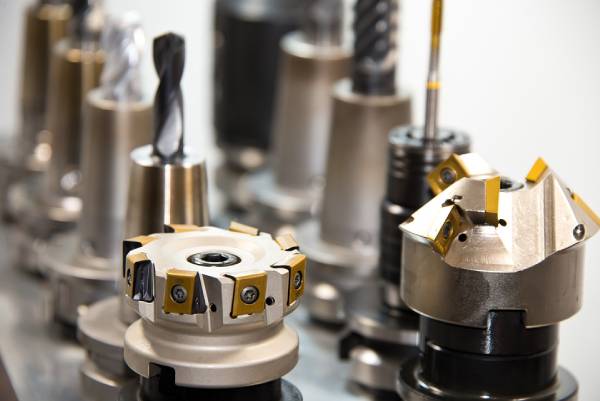
Featured Image Source: https://pixabay.com/photos/milling-drill-cutting-tools-444493

How to Choose a Laptop for Office Work

How to Choose a Laptop for Office Work

When you’re looking for laptops for your business, there are many factors to consider. These include form factor, hardware, and software.

A touchscreen can be a big help for designers sketching products or marketers designing new campaigns, and many laptops now offer this capability. Pay attention to screen resolution, too, as this determines how sharp and clear images and texts will be on the display.

Processor

The processor (also known as the chip) is one of the most important components when choosing a laptop for office work. It determines the computer’s performance and how well it can handle various applications. It also affects the battery life of the device, so look for a model with a high-performing processor.

When choosing a laptop for business, consider the operating system as well. Windows and macOS are popular choices for business laptops, but Chrome OS and Linux are worth considering as well depending on the type of work your team does.

A good laptop for office use should have at least 8GB of RAM. This will ensure that the laptop can handle modern programs without slowing down. As apps get more and more features, files become larger and new, more demanding technologies emerge, the laptop’s memory will need to be upgraded in order to keep up.

RAM

The memory (or RAM) is where a laptop stores information that needs to be used quickly. Opening many programs or accessing multiple files can cause the computer to slow down if the system hasn’t got enough memory available.

For example, if you are working with large spreadsheets or videos, you may want to look for a machine with more than 8GB of RAM. Similarly, if you need to edit photos or run graphics-heavy software, consider getting a laptop with 16GB of RAM.

Business laptops are designed for heavy usage, so it’s best to start with a high-grade processor that can keep up with modern software and files. You’ll also need plenty of storage and fast RAM, which is usually provided by a solid-state drive rather than a traditional hard disk drive. This type of drive offers faster performance and a long battery life, which can be especially important for workers who travel frequently or work remotely.

Storage

In business, it’s important to have a laptop that can hold many files and documents. Choosing one with a larger hard drive or solid-state drive may be helpful for office users, who need to access these documents frequently. Also, choosing a laptop with a high-grade battery can help ensure the unit doesn’t have to be plugged in constantly to recharge.

In addition to storage capacity, the size of the screen can also affect productivity. The screen size should be able to accommodate most business needs, while also providing enough space for a keyboard and mouse.

Additionally, choosing a laptop with multiple ports can be helpful for connecting to external devices. However, it is important to remember that the number of ports will influence the overall size and weight of the laptop. Having more ports generally means the laptop will be bulkier. Additionally, it is recommended to have more RAM than what the machine requires to avoid slowdowns.

Graphics card

A laptop for office work typically does not need a dedicated graphics card. The integrated graphics chips in modern CPUs are more than sufficient for the graphical requirements of most office productivity software. However, if you plan to use your laptop for video editing or 3D modeling, a dedicated graphics card will provide more processing power and speed.

The GPU (graphics processing unit) receives image information from the CPU and converts it into pixels (tiny squares that combine to form images on your computer monitor or display). The more pixels, the greater the definition. For example, a high-definition (HD) image has two times as many pixels as a standard-definition (SD) image.

Other important factors to consider include the operating system and screen size. Most laptops come with Windows, but you can also find models that run macOS or Linux. The latter is open source and free but requires more technical knowledge to use.

Keyboard

There is a huge range of laptops out there, but finding the right one for your business can be difficult. Some of the key features to consider include battery life, processing power, ports, and more. The keyboard is also important, as it will affect how comfortable it is to use and whether or not the keys feel like they are made of quality material.

Ultimately, it is best to test out laptops in person before buying them. This way, you can see how they feel and if they are suitable for your work. Also, reading reviews can help you decide if a laptop is worth the price tag.

As for software, most office workers will require at least a Windows operating system. This is because it is widely compatible with most applications and hardware, and is generally less expensive than other options, such as macOS or Linux.

Display

The display is one of the most important elements of a laptop. You’ll stare at it for hours a day, so you want to make sure that it meets your needs. There are many different options to consider, from LCDs and LEDs to mini-LED and OLED displays. Each has its own benefits and drawbacks.

The screen size is another important consideration. If you need to work with multiple windows open side-by-side, a larger display might be better. Also, you might want to choose an anti-glare or infinity-edge screen to reduce distractions and maximize screen space.

In addition to the processor and memory, it’s important to consider the type of screen you need for your laptop. You’ll find IPS (In-plane Switching) screens on most mainstream laptops, but you can also find more advanced options such as FHD and 4K resolution. These options provide better color accuracy, higher brightness and a wider viewing angle than older technologies like TN.

Featured Image Source: https://cdn.pixabay.com/photo/2015/09/05/22/33/office-925806_640.jpg