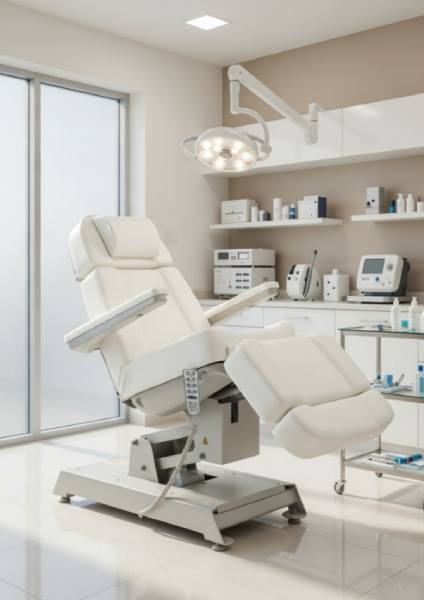
Patient positioning can influence comfort and access during a procedure. A patient who shifts halfway through a filler session may require the treatment position to be adjusted. Derma chair hydraulic controls can be useful here, allowing the practitioner to change height during a procedure without manually repositioning the chair. The adjustment can be made while the patient remains in position.
Access Angles Decide How Cleanly a Procedure Runs
Positioning Controls Practitioner Reach: Derma chair hydraulic adjustment gives clinics stepless height control across a wide range, allowing the practitioner to set the working height according to the treatment area and preferred working position. Foot pedal operation counts for as much. Hands can remain available for the patient while the chair is adjusted, depending on the procedure and the control arrangement. Small things. It can help reduce the number of manual adjustments needed across a full list.
Treatment Surfaces Serve Different Clinical Roles: A physical therapy table works to a different brief, built flat and broad so rehabilitation staff can work around a patient lying prone. Dermatology rooms may not need that footprint. Seated and semi-reclined work is common, which is why chair geometry can be useful for facial, neck and scalp treatments that run past twenty minutes.
Height, Backrest and Tilt Carry the Real Weight
Height Range Helps Set the Working Position: Height range does more than fit the patient. Practitioners working with a fixed seat for extended periods may find an adjustable height useful when setting their preferred working position. Patients booked in repeatedly for chronic skin conditions may also use the same chair across different sessions. A chair that drops low and rises high gives the practitioner more options when setting the working height.
Backrest and Leg Support Help Position the Patient: Backrest angle sets the working plane. Sessions involving laser resurfacing can require the patient to remain in one position for an extended period, making appropriate back and leg support an important consideration. Leg rest and tilt then provide additional positioning options, allowing the practitioner to adjust the patient’s position according to the procedure. The right combination depends on the chair specification and the treatments being carried out.
Manual, Hydraulic and Motorised Controls Behave Differently
Hydraulic Movement Suits High Volume Rooms: Manual chairs rely on a crank or gas lift. They can be economical to buy, with adjustment carried out manually. Derma chair hydraulic models sit in the middle of the market and can provide stepless height control without requiring an electric motor for height adjustment. Fewer electronic components can also make the mechanism simpler to operate and maintain, depending on the chair design.
Motorised Systems Repeat Positions Precisely: Motorised systems change the calculation again. Programmable handsets can store preferred positions, so a four-motor chair can return to a saved position for repeat clients where this feature is provided. Clinics running aesthetic and rehabilitation services side by side sometimes pair one motorised chair with a physical therapy table, because each surface can be selected according to the requirements of the treatments being carried out.
Adjustment Points Worth a Closer Look:
● Lowest seat height, measured with a patient sitting in it rather than the chair standing empty
● Backrest travel from fully upright through to complete recline
● Whether the leg rest moves on its own or only with the backrest
● Tilt. Plenty of chairs skip it
● Foot pedal placement, since a badly sited pedal can be inconvenient during a procedure
Positioning Made for Both Sides of the Chair
Specification sheets rarely show how a chair behaves at eight in the evening after a full day of use. Ask for a demonstration in the room where it will sit, with a colleague seated in it. Compare hydraulic against motorised for the procedures actually booked, then request a quotation from a manufacturer that builds its own frames.
