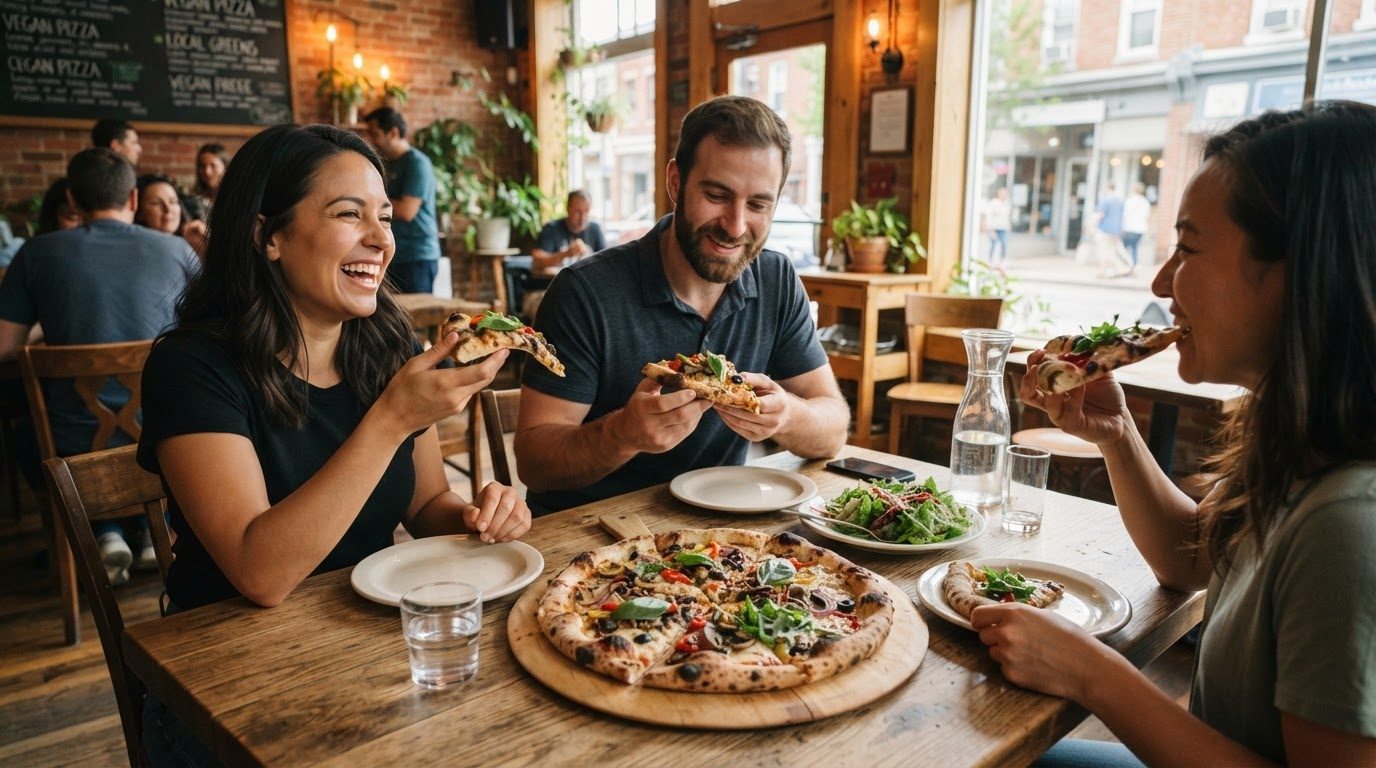
A memorable vegan pizza begins long before the first slice is lifted. It depends on a crisp or chewy crust, a properly seasoned sauce, vegetables cooked with intention, and enough contrast to keep each bite interesting.
For diners searching for a vegan pizza restaurant, the key question is not simply whether dairy-free cheese is available. It is whether the kitchen can build a cohesive plant-based meal, accommodate mixed groups, and explain which ingredients are genuinely vegan.
That makes ingredient questions worthwhile at The Tomato Shack salad & pizza co, Conshohocken, particularly when ordering for someone with allergies or strict dietary requirements. Menu availability and preparation methods can change, so confirming details before ordering remains good practice.
What Makes a Great Vegan Pizza Experience
A satisfying plant-based pie is an exercise in balance. Tomato sauce should provide acidity and savoriness without overwhelming delicate vegetables. The crust needs enough structure to support toppings while retaining the texture the restaurant intends—whether that is thin and crisp, airy and foldable, or thicker and bread-like.
Cheese substitutes can contribute salt, fat, browning, and cohesion, but they cannot compensate for a bland foundation. Some vegan cheeses melt smoothly; others brown quickly, remain firm, or work better as a finishing element. A cheeseless pizza can also be excellent when the sauce, roasted produce, herbs, and olive oil supply enough richness.
There is an important distinction between a fully vegan pizza and a conventional pie modified by removing dairy. A pizza may still contain animal-derived ingredients in:
- Dough enriched with milk, butter, or whey.
- Pesto made with Parmesan or Pecorino.
- Sauces containing cream, butter, or hidden dairy.
- Parmesan sprinkles, specialty meats, or egg-based toppings.
- Shared preparation surfaces or cutters that create cross-contact concerns.
When ordering, ask whether the dough and sauce are vegan, whether vegan cheese is cooked separately or on shared equipment, and whether finishing ingredients such as ranch, garlic butter, or Parmesan-style toppings contain animal products. “Dairy-free” and “vegan” are not always interchangeable, especially when eggs or other animal-derived ingredients are involved.
Build a Pizza Around Flavor, Not Substitutions
The strongest custom pies begin with a flavor profile rather than an inventory of every available topping. Too many wet or heavy ingredients can steam the crust, weaken its structure, and blur individual flavors.
Savory and roasted
Roasted vegetables, mushrooms, onions, peppers, and olives create depth through browning, umami, sweetness, and salt. Mushrooms pair particularly well with garlic and herbs, while olives can provide enough briny intensity that additional salty toppings should be used sparingly.
Light and garden-style
Artichokes, spinach, tomatoes, basil, parsley, and other fresh herbs offer a brighter combination. Because leafy greens and fresh tomatoes release moisture, moderation matters. Artichokes and spinach may work best when distributed evenly rather than piled in the center.
Hearty and protein-forward
Plant-based sausage, pepperoni, crumbled alternatives, or seasoned legumes can make a pizza feel more substantial. These toppings often bring their own salt, spice, and fat, so the sauce and finishing ingredients should be adjusted accordingly.
Finishing character
Garlic, chili flakes, oregano, black pepper, and vegan Parmesan-style seasoning can sharpen a pie after baking. A drizzle of olive oil or a squeeze of lemon may add lift, but the finish should support the core ingredients rather than disguise them.
A useful construction rule is to choose one main flavor direction, one substantial topping, two or three supporting vegetables, and a controlled finish. Seasonal produce and rotating specials can make this approach especially appealing: a menu may shift from bright summer tomatoes to roasted squash, greens, or mushrooms as the year progresses.
Vegan Options for More Than One Kind of Diner
A vegan pizza restaurant can be practical for groups precisely because not everyone at the table needs the same meal. Vegans may want a fully plant-based pie, vegetarians may accept a broader range of toppings, and flexitarians may simply prefer a vegetable-forward option. Other guests may be looking for a lighter lunch without adopting a specific diet.
That flexibility suits family dinners, casual lunches, office meals, and informal celebrations. For a group, ordering one familiar pie alongside a more adventurous vegetable or plant-protein option can reduce friction. Individual pies are useful when preferences differ sharply; larger pizzas are generally more efficient for sharing when the group can agree on a base.
Look beyond pizza when the menu allows it. Salads can add acidity and freshness, while plant-based pasta, appetizers, or desserts can make the meal feel complete. A salad is also a useful counterpoint to a richer pie, particularly when toppings include meat alternatives or a substantial vegan cheese.
Vegan and gluten-free are separate requirements. A standard vegan crust may contain wheat, and a gluten-free crust may still include dairy or egg. Guests with celiac disease or serious allergies should ask about ingredient labels, dedicated equipment, oven procedures, cutting tools, and cross-contact controls. A restaurant may be able to provide an ingredient-compatible choice without operating a fully allergen-free kitchen.
Ordering Vegan Pizza in Conshohocken
Conshohocken’s restaurant scene serves commuters, residents, families, and office groups, so the best ordering method depends on timing and party size. Dine-in is useful when customization questions need a direct answer. Takeout can preserve control over serving time, while delivery is convenient for offices or gatherings but may affect crust texture during transit.
Advance ordering is sensible for larger pies, multiple dietary variations, or specialty ingredients. Before placing the order, check the current menu rather than relying on an old photo, review, or social post. Vegan cheese, meat alternatives, seasonal produce, and limited-time specials can change.
A concise checklist helps:
- Is the dough vegan, including any oil, milk, butter, whey, or egg?
- Are the sauce, pesto, garlic oil, and dressings dairy-free and egg-free?
- Is vegan cheese available, and how does it melt or brown?
- Are plant-based meats cooked on shared surfaces?
- Can the pizza be cut with a clean wheel if cross-contact is a concern?
- Is the gluten-free crust prepared separately from wheat products?
For mixed groups, start with the strictest requirement, then build outward. One clearly vegan pie can share the table with vegetarian or conventional options, but separate boxes and serving utensils may matter to guests with strong cross-contact concerns. If several people want different toppings, individual sizes may cost more but reduce waste and disagreement.
A Better Way to Judge a Plant-Based Pie
A structured tasting approach makes it easier to distinguish a thoughtfully designed vegan pizza from a conventional pie with ingredients removed.
Crust
Assess the underside for even browning and the interior for the intended crumb. A good crust should support toppings without becoming soggy or brittle. Delivery can soften crisp edges, so compare expectations with the restaurant’s format.
Sauce
Look for balanced acidity, salt, sweetness, and seasoning. Sauce should bind the ingredients without flooding the center or disappearing beneath heavy toppings.
Vegan cheese
Judge melt, browning, stretch, and flavor independently. Some products excel at creamy coverage; others provide a sharper, more savory finish. The best choice is the one that complements the crust and toppings rather than dominating them.
Toppings
Freshness, distribution, and moisture control matter as much as ingredient quality. Mushrooms should not leave a watery center, greens should not burn before the crust finishes, and plant-based meats should be seasoned rather than used merely as visual substitutes.
Overall balance
The final test is whether the pizza remains engaging from first bite to last slice. A strong vegan pie should stand on its own as a complete composition—not feel like a compromise made for someone who cannot eat the standard version.
For a first order, choose a signature plant-based combination if one is available. For a more personal meal, build around a flavor profile and limit the number of wet toppings. Seasonal creations are worth trying when the kitchen is using produce at its best. The most useful question is simple: does every ingredient contribute texture, flavor, or contrast? If the answer is yes, the result is likely to be worth gathering around.