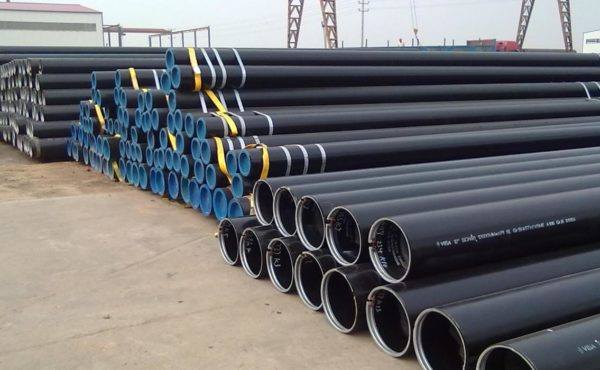
Selecting a pipe for a system that runs at 1,000 degrees Fahrenheit is nothing like sizing a line for cold water service. Sustained heat alters the metal. Wall thickness alone will not save a poorly specified run, which is why chrome pipe keeps showing up in refinery and boiler drawings where carbon steel gives out.
Where Sustained Heat Starts Breaking Ordinary Steel
Grades Built to Hold under Thermal Load: Chrome pipe holds its strength at temperatures where plain carbon lines begin to sag and scale, which makes it the working choice for superheater headers and hydroprocessing service. Chromium and molybdenum act together in the alloy, slowing oxidation while holding creep rupture strength across thousands of operating hours. Metallurgy is old and well proven.
What Mill Testing Actually Catches: Documentation matters more than most buyers admit, right up until a weld cracks during startup. Quality control at the mill covers chemistry verification, hydrostatic testing, and nondestructive examination, with the mill test report tying each length back to its heat number. Missing paperwork on a P22 header becomes a real problem later.
Specification Codes That Decide What Actually Ships
Inside ASTM A335 and ASME SA335: ASTM A335 covers seamless ferritic alloy steel pipe for high-temperature service, and ASME SA335 mirrors it for code-stamped pressure work. Both spell out chemistry limits and the required heat treatment for each grade, along with mechanical property minimums. Normalizing and tempering, or full annealing, depending on what sits on the purchase order.
Grade Ranges from P1 through P91: The grade family spans a wide temperature and pressure range, and each step up adds chromium content. Choosing a chrome pipe from within that range depends on where the line sits in the process, not on which grade the last project happened to use. Substitution without review causes trouble. A quick look at the common options:
- P1 carries a carbon moly chemistry and suits moderate steam temperatures
- Sulfur-bearing refinery streams push buyers toward P5 or P9
- P11 and P22 handle most boiler headers, hot reheat lines, and process heater coils
- P91 allows thinner walls and lighter supports, though welding rules get stricter
Matching Grade to the Real Operating Envelope
Pressure, Temperature, and Service Life: Design temperature sets the allowable stress value, and allowable stress sets the wall thickness. Push a grade past its rated limit and creep damage accumulates quietly for years before a bulge appears. Corrosion resistance matters just as much in sour service, where chromium content decides how the inside surface behaves over a decade.
Why Welding Rules Change with the Grade: Welding procedure adds another layer to the decision. P91 needs preheat, controlled interpass temperature, and post-weld heat treatment carried out correctly, and shops that skip steps leave hardness problems sitting in the heat affected zone. Cheaper grades forgive more. That difference belongs in the conversation before a grade gets locked into the design package.
Where Mismatched Material Shows Up: Failures rarely announce themselves at commissioning. They show up during a turnaround inspection, or worse, during an unplanned outage that shuts a unit for weeks. Tight quality control on incoming material, matched against the design conditions on the isometric, catches the mismatch while the pipe still sits in the yard.
Building a Piping System That Holds Up under Heat
Grade selection is a decision made once and lived with for twenty years. Code requirements and material availability pull in different directions, and the right call comes from working through both before the requisition goes out. Speak with a supplier about grade options and request a quote for the specification the system actually needs.
